



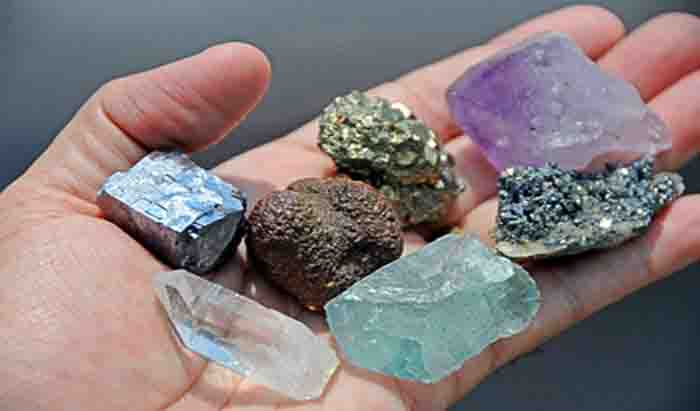
Strategic Minerals
In recent years there have been concerns expressed and many assessments made of the critical nature of the supply of certain mineral raw materials to national economies. Major risk factors have been identified including the concentration of production at company or national level, the political stability of producing countries, and sudden demand peaks. The essential role high tech materials are playing in the developed countries for innovative green tech applications is now well recognized.
In 2008 several commissions of the EU, USA and Japan amongst many others released reports on the role of strategic minerals in their economy. An increasing number of elements were assessed as “highly critical” such as indium, cobalt, niobium, tantalum, rare earth elements, lithium and the platinum group metals.
High Purity Quartz Resources
In the early 1970s, Brazil was the world’s main supplier of high purity quartz based on lascas, a term used to describe manually beneficiated rock crystal. Up to 1974, when the Brazilian government imposed an embargo on exports of lump quartz, export levels rose to in excess of 10,000 tpa. There have been efforts in Brazil to move more into processed high purity quartz supply, led by Mineracao Santa Rosa (MSR), one of the leading lump quartz and lasca suppliers in the country. The other main source of lascas has been Madagascar, which is still producing from small mining operations.
Today, US-based Unimin Corp./Sibelco is the most significant producer of high purity quartz worldwide with deposits and operations in North Carolina, USA. One of the few alternative suppliers, Norwegian Crystallites, has been producing high purity quartz from its Drag plant in western Norway and several underground and open pit mines since mid-1996 when the company changed ownership. Following the acquisition of North Carolina K-T Feldspar (2001) and the Feldspar Corporation (2007) by french company Imerys, Norwegian Crystallites and Imerys joined to form the Quartz Corp. in 2011. Quartz raw material for high purity applications is mined just adjacent to one of the Unimin deposits in North Carolina, then shipped and refined into high purity quartz products at its Drag plant in Norway. Crystalline fillers and high purity quartz sand are produced and exported worldwide to the semiconductor, lighting and other industries. Although mined by two companies (Unimin Corp. and The Quartz Corp.), the geographical monopoly with only one major source for high purity quartz located in Spruce Pine, North Carolina, USA persists.
Potential new entrants into the high purity quartz world market are Moscow-based JSC Polar Quartz, with raw material supply based on the Neroika deposit on the eastern slope of the sub-polar (northern) Urals. After many years of stagnancy Rusnano, wholly owned by the Government of the Russian Federation, Ural Industrial Corporation, and Khanty-Mansiysk Autonomous Okrug signed a shareholders’ agreement for the Polar Quartz project in 2011.
Kyshtym Mining (also known as KGOK or Russian Quartz), situated on the Eastern slopes of the South Ural mountains, supplied 60% of domestic high purity quartz demand in the Soviet era. A project to technically refine and re-equip the manufacturing processes started in 2011 with financial support from Rusnano. In 2012 the first production line offering a capacity of 6,000 tons per year for dry concentration has been launched. One year later Rusnano announced its partial exit from Russian Quartz selling it to Sumitomo Corporation, a leading integrated business group headquartered in Japan.
By the end of 2012, Nordic Mining released a Scoping Study, describing the current status of development in the Kvinnherad quartz project. During an advanced test program very low final impurity levels with improved melting behaviour were confirmed and reproduced for samples from different locations in the deposit.
Another recent project development located in Mauretania (North-Western Africa) has been presented by MMC (Mauretania Minerals Company) during the Silica Arabica 2012 event in Jeddah, KSA, with more than 150 quartz veins in the desert area and proven high purity of processed quartz.
Little is known about Chinese Jiangsu Pacific Quartz Co., the biggest lamp tubing producer in China. Although extensive exploration work has been carried out in previous years, only small scale deposits have been indentified calling for selective mining and small output serving share of its own quartz glass production.
Given its strategic relevance in the semiconductor and photovoltaic industry many more high purity quartz projects are under development in Angola, Argentina, Australia, China, India, Kazakhstan, Mauretania, Norway, Saudi Arabia, Ukraine, Vietnam or Turkey to name just a few in which GPE is involved.
Lithium
Lithium, in a nutshell, is a highly chemically reactive element not found on Earth in elemental form. It isn’t mined as lithium. But the commercial world uses the name of the element when talking about the array of lithium resources, supply and demand.
Lithium is the lightest metallic element. As a metal it has important though minor use as its numerous applications in refined mineral form and in a variety of chemical combinations are owed to its innate mineralogical, chemical, electrochemical, and physical properties. Lithium is mined as a silicate mineral or harvested from natural brines and then used in mineral form or converted into lithium chemicals or metal.
Standard applications use lithium in refined mineral form as a flux agent in glass, ceramics, and metallurgy; in chemical form in batteries, glass, ceramics, cement, grease, CO2 absorption, elastomers, pharmaceuticals, and agrochemicals; and as a metal in batteries, pharmaceuticals, and aluminium alloys.
Lithium-based energy storage devices are the fastest growing lithium application and the most promising rechargeable battery type available today. The recently emerged application of lithium chemicals in power tools and portable devices such as laptops and cellular phones created strong increase in demand. Looking forward, the next generation of hybrid and all electric vehicles are focussed on lithium-based battery solutions, as are stationary energy storage systems, and are forecast to further increase lithium demand starting 2013.
The USGS reported dramatic price increases of almost 50% for lithium carbonate between 2006 and 2008 reflecting average growth in demand of nearly 8% per annum in the 2000-2007 period. But, following the general trend, growth slowed dramatically in 2008 to just 2.4% and, even though consumption fell 15% and production collapsed 25% in 2009, US delivered lithium carbonate prices only reflected the market’s reduction with a 20% decrease in January 2010. Throughout, the Chinese market continued unabated, owing to internal fiscal stimulation, based mainly on imported raw materials. The market is expected to return to growth in 2010 with the first significant impact from the automotive industry expected from 2013.
Today the supply of lithium raw materials is dominated by a handful of producers in Chile, Argentina and Australia. New potential demand scenarios have created a rush on the part of junior mining companies and others, some partly supported by major automotive and electronics companies, to develop projects in traditional resource types as well as new ones. Today’s producers have also made clear their resources potential and capabilities for capacity increases.
Rear Earth Minerals
The rare earth elements (REE) are a continuous series of fifteen elements from lanthanum to europium, comprising the light fraction (LREE), and gadolinium to lutetium accompanied by yttrium and scandium that comprise the heavy fraction (HREE). Despite their group name these elements are more common than many better known elements and they are metallic in character.
The REE are relatively abundant in the earth’s crust, but minable concentrations are less common than for many other ores. REE have been steadily growing in importance because of their value in many cutting-edge technologies such as automotive catalytic converters, wind power generators, phosphors for flat screens, LED and CFL lighting, high strength magnets, chemicals and petroleum refining catalysts, pharmaceuticals and metallurgical additives and alloys. For this reason there is today substantial exploration and evaluation of REE deposits around the world.
Besides the total REE concentration, the value of a certain deposit is determined by the balance between the LREE, which usually comprise 97-99% of the resource, and the HREE such as dysprosium and terbium which are of much higher value.
Cobalt
Cobalt is a hard, lustrous, silver-grey metal with a high melting point. It is a minor element of the earth’s crust and vital to a wealth of high-technology applications. Besides application as an electrode material in lithium ion batteries, cobalt has many applications including magnetic, wear-resistant and high-strength super alloys (such as those used on gas turbine blades and jet aircraft engines), catalysts, chemicals and coloured dyes.
Cobalt is traded on the London Metal Exchange. It is mined as a mineral concentrate and sold as both a metal and chemical product. Chemicals account for 58% of cobalt output, a market which has risen to dominance over the last decade through the increase in global battery domination.
Presently cobalt is a by-product sourced primarily from copper and nickel mining rendering cobalt output highly dependent on the production of these primary metals.
It is estimated that demand for cobalt will continue to grow year on year with many analysts believing it will soon be in a deficit situation. 55% – 60% of the world cobalt supply is from the politically instable Democratic Republic of Congo which has come under intense scrutiny following reports from Amnesty International that around 20% of this supply was sourced using artisanal mining and child labour. This along with falling copper and nickel prices causing supply to be cut in the DRC, means that this cobalt supply source may no longer be sustainable.
Cobalt consumption by the rechargeable batteries sector represents the largest single source of cobalt demand. The rapid growth in demand is attributed to the increasing popularity of Li-ion batteries in electronic devices (smart phones, tablets, portable PCs, power tools). The developments in new applications such as electric vehicles and home energy storage units show that the real growth in cobalt demand is yet to come.
Cobalt is a critical functional component to a lithium ion battery and makes up an average of 10-15% of the cathode. Cobalt chemicals are used as a key component in three major lithium ion battery chemistries: Lithium cobalt oxide (LCO), lithium nickel manganese cobalt oxide (NMC) and lithium nickel cobalt aluminium oxide (NCA). The latter two are rapidly becoming the technology of choice for the EV sector. Both, projected significant growth in cobalt consumption from the battery sector and the instable supply situation have created an interesting opportunity for new projects with a focus on high grading and primary cobalt resources entering the market.
Graphite
Today 95 % of the EU’s graphite demand is imported from China who currently accounts for almost three quarters of world graphite production. Only one of the reasons why the EU raw materials initiative identified graphite as a critical high tech raw material. China’s raw material export restrictions and a graphite industry that experiences high growth rates with the lithium battery industry and electromobility being the main drivers in need have fostered the development of numerous graphite projects outside China.
Graphite consists of a stack of individual carbon layers in which the carbon atoms are arranged in a honeycomb structure, individual layers being weakly held together. This structure results in very good heat and electrical conductance within the layers, flexibility, high resistance to chemical attack and its highly refractory character.
These unique properties make natural graphite the material of choice for a wide variety of applications including steel manufacturing, refractories, lubricants, automotive parts, carbon brushes, batteries and a variety of other applications.
Besides these rather traditional uses there is a wealth of emerging applications including lithium ion batteries, fuel cells, pebble bed nuclear reactors, ceramic armour tiles and a variety of special applications of graphene in the high-tech industry which will lead to a greatly increased demand.
Graphite is traded in amorphous (70-85% C), flake (85-90% C), vein (90-96% C) and synthetic (97-99% C) grade. Prices achieved for the grades are dependent on carbon content, flake size, ash levels, impurity levels and impurity types.
Flake or vein graphite can be processed to the high value expandable graphite or spherical graphite qualities which are obtained by a sequence of processing steps ending up with a high purity product. Flake graphite is playing a key role in the green energy revolution since electromobility and energy storage solutions rely on spherical graphite as anode material in Li ion battery technology offering higher power densities, being lighter and more compact than conventional batteries. Graphite consumption in Li ion batteries is more than 20 times that of Li. Amorphous graphite is used in applications such as brake linings, refractories and steelmaking.
Graphene, a material consisting of just one single carbon layer, is of considerable interest and holds tremendous potential for many emerging and highly advanced technical applications since it combines the favorable physical properties of graphite such as superior strength and flexibility compared to steel and extremely good heat and electrical conducting properties with transparence making it a superior material.
Fluorspar
Fluorspar (CaF2) is the most important source of fluorine forming the base of a large number of high value industrial applications. Fluorspar has been declared one of the critical minerals by the EU, with fluorine being indispensable in most of its applications.
Major applications include coolants for refrigeration and air conditioning as well as in the production of highly insulating polymers such as polyurethane and polystyrene.
Fluoropolymers such as DuPont’s well known TEFLON® or polytetrafluoroethylene (PTFE) possess unique properties like superior insulation, fire resistance, mechanical strength, low surface tension and high resistance against chemical attack.
Three main commercial grades of fluorspar are distinguished: metallurgical grade (75-82% CaF2), ceramic grade (94-96% CaF2) and acid grade (97% CaF2).
Metallurgical grade fluorspar (metspar) representing almost one third of world production volume is used in the manufacturing of aluminium and stainless steel, in extraction of metals such as niobium and tantalum, in metal processing to remove unwanted impurities and in various other applications.
Ceramic grade fluorspar is used in the fabrication of fiberglass insulation, flint glass, opal glass and enamels. Another prominent use for fluorspar or fluorspar mixtures is as a coating for welding rods and in the production of magnesium and calcium metals.
Acid grade fluorspar (acidspar) is the highest valued and economically most important one (two thirds of world production volume) since it is used as a feedstock for the production of HF, principal base for the production of fluorocarbons and -polymers.
China, one of the four main fluorspar producing countries accounting for approximately 60% of world production, is increasingly using its fluorspar resources for its own production restricting raw material exports and applying resource taxes.
The fluorspar market experienced price increases since 2000, the price of acidspar more than doubled. Annual growth rates for basic uses such as catalysts, glasses and ceramics, fluorine gas and steel manufacture will be around 4% those for fluorochemicals are expected to be much higher.
Above developments have stimulated an interest in the exploration and development of new fluorspar deposits with a number of projects coming up.
Nb-Ta-Minerals
Tantalum and niobium are transition metals with very similar chemical and physical properties. Both show outstanding chemical inertness and thermal refractoriness (melting points at 3020°C and 2469°C respectively).
The major part of niobium produced is used in the production of high strength low alloy (HSLA) steels (main uses in structural, piping and automotive applications) and superalloys used in the aerospace industry while the remainder is sold as niobium carbides (e.g. cutting tools) and chemicals.
There is a variety of widespread emerging applications for tantalum including mobile electronic devices such as laptops and smartphones. The electronic industry is the main consumer of tantalum using up to half of world production, while the other half goes into tantalum metal products, ingots and carbides.
Both, tantalum and niobium exhibit exceptionally high specific performance in capacitors and resistors thereby enabling further miniaturization in electronics. Other hi-tech uses for Ta include use as a sputtering target and in prosthetics while Nb finds applications in superconductors.
In nature tantalum and niobium usually occur together as a result of their chemical similarity, tantalum being present in subordinate proportions. They do not occur in metallic form but are present in a variety of oxidic minerals with columbite-tantalite, pyrochlore, wodginite and loparite being the most important ore minerals.
Major deposits hosted in carbonatite complexes are found in Brazil (Araxá and Catalão) and Canada (Saint-Honoré). Alkaline to peralkaline rocks such as the Illimaussaq complex in Greenland also host significant niobium occurrences. Historically pegmatites located in Canada (Bernic Lake) and Australia (Greenbushes and Wodgina) have been important sources of tantalum. Tantalum is also recovered from placer deposits as a by-product of tin.
Brazil accounts for more than 90% of the global niobium production with Canada and Africa accounting for the rest. CBMM in Brazil holds a near market monopoly for niobium.
Main producers of tantalum are located in Africa (>60%), where it is mined largely in artisanal mining operations in the politically unstable DRC and Brazil (20%), followed by less significant producers in Australia, Canada and Malaysia.
Tantalum and niobium are traded in a variety of forms including carbides, metal powders and other chemicals.